What Makes a Pregnancy High-Risk?
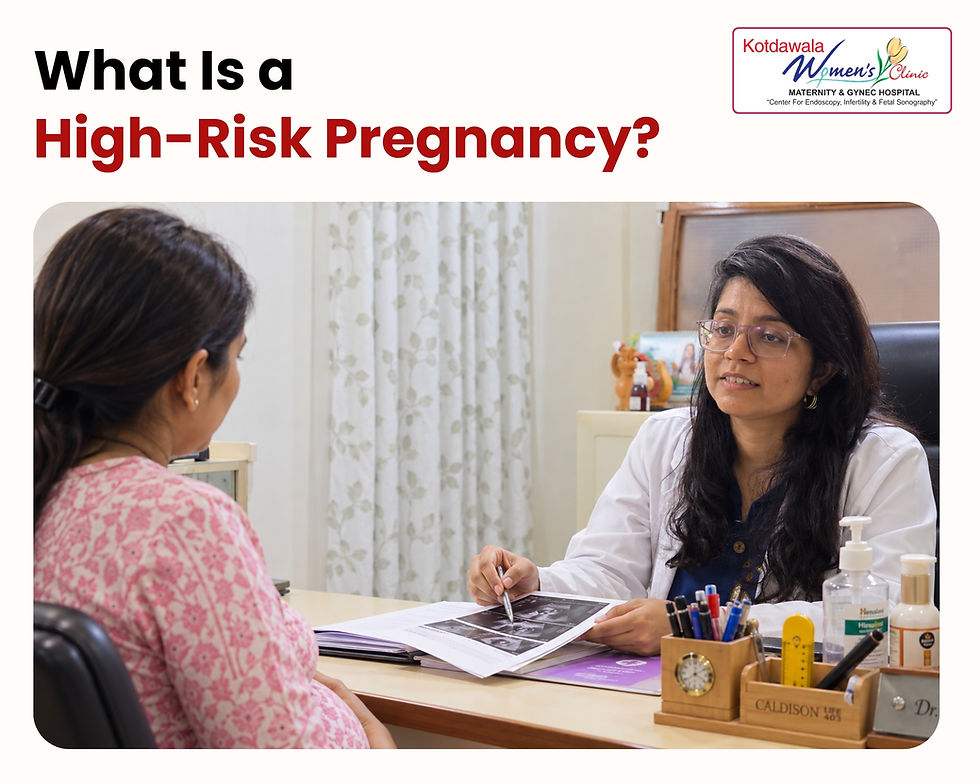
A high-risk pregnancy simply means your pregnancy needs closer monitoring than usual, due to a medical condition, a complication, or a specific risk factor. It does not mean something is wrong with your baby, and most high-risk pregnancies result in healthy deliveries with the right care.
At Kotdawala Women’s Hospitals in Ahmedabad, Dr. Kanan Kotdawala specialises in managing high-risk pregnancies, and one of the first things she tells patients is that "high-risk" is a monitoring category, not a diagnosis.
What makes a pregnancy high-risk?
A pregnancy may be classified as high-risk for several reasons, and having one or more of these factors doesn't automatically mean complications will occur. It means your doctor will watch for them more closely.
Common factors include:
Pre-existing conditions such as diabetes, high blood pressure, or thyroid disorders
Gestational diabetes or high blood pressure that develops during pregnancy
Twin or multiple pregnancy
Pregnancy through IVF or other fertility treatment
Being under 18 or over 35 at the time of pregnancy
A history of miscarriage, preterm birth, or pregnancy loss
Certain findings on scans, such as placenta position or fetal growth concerns
What changes if your pregnancy is high-risk?
In most cases, being classified as high-risk means more frequent visits and additional monitoring, not additional worry. Depending on the specific risk factor, this might include:
More frequent ultrasounds to track your baby's growth
Additional blood tests or glucose monitoring
Blood pressure checks at every visit
Doppler studies to assess blood flow to the baby
A more detailed delivery plan, discussed in advance with your doctor
The goal of this closer monitoring is straightforward: catching anything that needs attention early, while things are still easy to manage.
Does high-risk mean a difficult delivery?
Not necessarily. Many women with high-risk pregnancies have completely normal vaginal deliveries. The mode of delivery depends on the specific reason your pregnancy is high-risk, how the pregnancy progresses, and your baby's position and well-being closer to your due date, not on the high-risk label itself.
When should you see a specialist?
If your gynaecologist has flagged your pregnancy as high-risk, or if you have a pre-existing condition and are planning a pregnancy, it's worth consulting a fetal medicine specialist early, ideally in the first trimester, so a monitoring plan can be put in place from the start rather than after a concern comes up.
Frequently Asked Questions:
Does high-risk pregnancy mean my baby is unhealthy?No. It means your pregnancy needs closer monitoring due to a specific factor. Most high-risk pregnancies result in healthy babies.
Can I still have a normal delivery if my pregnancy is high-risk?In many cases, yes. The mode of delivery depends on your specific condition and how your pregnancy progresses, not on the high-risk classification alone.
How often will I need to see the doctor if my pregnancy is high-risk?This varies by individual case, but visits are generally more frequent than a standard pregnancy schedule, so your doctor can monitor you and your baby closely.
If you've been told your pregnancy is high-risk, or you have a condition that may need closer monitoring during pregnancy, Dr. Kanan Kotdawala offers consultations at Kotdawala Hospitals, Bhulabhai Park and Paldi, Ahmedabad. Get in touch to book a consultation → click here


Comments