When Do You Know It’s Time for Labour?

Labour usually announces itself through a combination of regular, strengthening contractions, your water breaking, or the loss of your mucus plug, though not every woman experiences all three. The most reliable sign is contractions that come at regular intervals, get progressively closer together, and don't ease up with rest or movement.
Many women, especially first-time mothers, aren't sure whether what they're feeling is real labour or their body's way of preparing for it. Both are completely normal, and knowing the difference can save you an unnecessary trip to the hospital, or help you recognise when it's genuinely time to go.
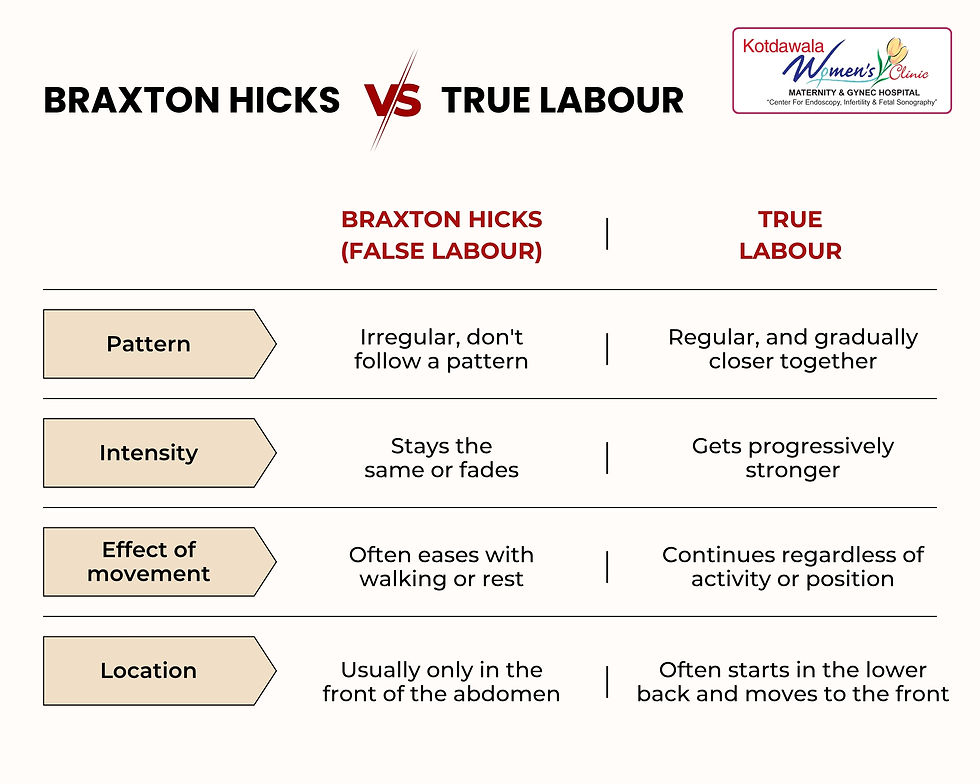
True labour vs false labour (Braxton Hicks)
Braxton Hicks contractions are your body's practice runs, usually starting in the third trimester. They can feel similar to real contractions, which is exactly why they cause confusion.
The clearest signs that labour has started
Regular, strengthening contractions that come at consistent intervals and don't stop with rest
Your water breaking, either a sudden gush or a slow, steady trickle of fluid
Loss of the mucus plug, sometimes with a small amount of blood, often called "show"
Lower back pain that comes in waves, rather than staying constant
Pelvic pressure, a feeling that the baby has moved lower
Not every woman experiences these in the same order, and some go into labour without ever noticing the mucus plug pass at all. That's normal too.
When should you head to the hospital?
A commonly used guideline is 2-3 contractions in 10 mins and each contraction should last for at least 35- 45 seconds. This is a helpful general marker, though your doctor may give you a more specific guideline based on your individual pregnancy, especially if it's high-risk or you live further from the hospital.
You should contact your doctor immediately, regardless of contraction timing, if:
Your water breaks, even without contractions
You notice heavy bleeding, not just light spotting
You feel a significant reduction in your baby's movements
You have a high-risk pregnancy and have been advised to come in earlier
What happens when you arrive
Once you reach the hospital, your doctor will check your cervix for dilation, monitor your baby's heart rate, and assess your contraction pattern to confirm whether you're in active labour. If it's still early, you may be advised to go home and return once contractions are stronger and closer together, this is common and doesn't mean anything is wrong.
Frequently Asked Questions
How do I know if it's real labour or just Braxton Hicks? Real labour contractions are regular, get progressively stronger, and don't ease with rest or changing position or any medication. Braxton Hicks tend to be irregular and often fade on their own.
What if my water breaks but I don't have contractions yet? Contact your doctor immediately. Labour usually follows within 24 hours, but your doctor will guide you on next steps based on your specific situation.
Is it normal to not notice the mucus plug pass? Yes, completely normal. Some women notice it clearly, others don't notice it at all, and both are perfectly fine.
If you're nearing your due date and want a clear plan for what to watch for and when to come in, Dr. Kanan Kotdawala offers consultations at Kotdawala Hospitals, Bhulabhai Park and Paldi, Ahmedabad. click here


Comments